


White Fabric & Transfer Science: How Brides Avoid Makeup Stains on Wedding Dresses
January 2, 2026

If you’re wearing a white wedding dress, chances are you’ve worried about one thing: Makeup Transfer. From bronzer on the neckline to foundation on the bodice, white fabric shows everything and once it’s there, it’s hard to fix.
This guide breaks down the real science behind makeup transfer, where it actually happens, and how brides can tan, hug, move, and dance in a white gown without staining it. If you’re planning your bridal beauty or already have your dress hanging in the closet, this is exactly what you need to know.
Why White Fabric Shows Makeup Transfer So Easily
White fabric doesn’t just show makeup more, it absorbs pigment differently. Most wedding gowns are made with delicate materials like satin, silk, crepe, or lace. These fabrics are porous, meaning oils and pigments cling fast and spread easily.
What causes transfer most often:
- Cream based products (foundation, bronzer, body makeup)
- Excess oils on the skin
- Friction from movement, hugs, or heat
- Poorly set makeup
The key takeaway: transfer is more about product type and placement than color depth.
Where Makeup Transfer Really Happens (And Why)
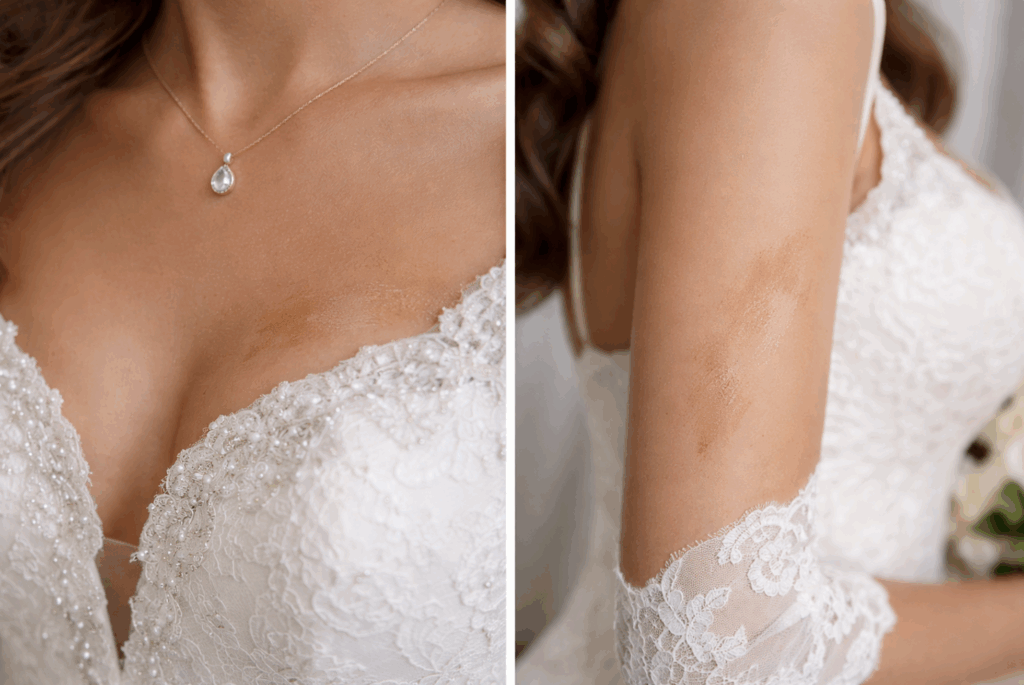
Makeup transfer doesn’t happen randomly, it happens in specific, high contact areas where skin, product, and fabric interact the most.
Transfer is most likely in these zones:
- Neckline and upper chest
- Underarms and side bodice
- Inside straps or halter areas
- Inner arms during hugs
- Collarbone and shoulder points
These areas experience the most heat, movement, and friction, which breaks down makeup and body products faster than anywhere else on the body
Can Brides Tan Without Staining a White Dress?
Yes! But how you tan matters more than if you tan.
What to Avoid:
- Spray tans done too far out from the wedding.
- Oil based self tanners.
What Works Best:
- Spray tans done 2-3 days before the wedding
- Clear or rapid rinse formulas
- A full exfoliation 48 hours before tanning
By wedding day, your tan should be fully developed, settled, and no longer transferring pigment.
Why Bronzer and Body Makeup Are the Biggest Culprits
Body bronzer and foundation feel tempting for evening out skin tone, but they’re the number one cause of dress stains.
Why?
- They sit on top of the skin
- Heat reactivates them
- Friction moves them directly onto fabric
Even “transfer resistant” products can break down after hours of wear and constant rubbing of the dress.
But keep in mind most makeup artists do blend face makeup slightly onto the body, being intentional around the neckline helps prevent any product from transferring onto the dress.
What About Tattoos or Body Makeup?
If you’re planning to cover tattoos or even out skin tone with body makeup, placement matters just as much as product choice.
Areas like:
- Wrists
- Forearms
- Ankles
tend to be low risk because your dress isn’t constantly rubbing against them.
High risk areas include:
- Chest and neckline
- Upper back
- Sides of the bodice
These zones are in continuous contact with your gown, making them far more prone to transfer even with long wear or “transfer resistant” products.
The goal isn’t more coverage. It’s strategic placement and proper products that protect your dress while still letting your skin look polished and intentional.
The Right Way to Set Skin for a White Wedding Dress
Setting products matter.
Best practices:
- Use a lightweight, oil controlling primer on the chest
- Use a professional grade setting spray in light layers (like the one size fixing spray)
- Let skin fully dry before getting dressed
Setting spray should be used as a seal.
How to Move, Hug, and Dance Without Ruining the Dress
Transfer doesn’t usually happen when you’re standing still, it happens when you’re living your day.
Smart movement habits:
- Slip into your dress after all makeup is fully set
- Hug with arms lower, not tight across the bodice
- Blot skin gently if you get warm never rub
These small habits prevent 90% of transfer issues brides experience.
Intentional Makeup Always Wears Better
White dresses don’t require perfection, they require intention.
When tanning is timed correctly, makeup is placed strategically, and skin is properly set, transfer becomes extremely rare. Brides who understand the science behind it enjoy their day without constantly worrying about their gown.
If you’re a New Jersey bride planning your wedding glam and want expert guidance on how to prep, apply, and protect your look from ceremony to last dance, working with a professional bridal beauty team makes all the difference.


SEND INQUIRY
Exactly how you envisioned it to be
look and feel your very best
view services
(in an extraordinary way)
Explore The Luxury Experience


